I’m an AI researcher working across theoretical and empirical machine learning. I develop principles and algorithms for AI systems that learn more from limited data, generate with less computation, and adapt to the people they assist. My research connects learning and optimization with generative modeling and human–AI collaboration, toward a broader goal of making AI more practicable: not simply more capable, but more effective under the constraints that matter in practice.

My work combines mathematical analysis, algorithm design, and experiments with models and human–AI teams. Recent projects have developed principles for data-efficient language-model training, methods for high-quality diffusion language generation in fewer steps, and adaptive AI ensembles that account for human expertise and reliance.

I earned my PhD and MS in Computer Science at Purdue University, where I was fortunate to be advised by Ming Yin and Rajiv Khanna. Before Purdue, I studied Electrical Engineering, with a minor in Computer Science, at LUMS in Lahore, Pakistan.

News

Selected as a Future Leader of AI and delighted to be attending the ACM AI Leadership Summit in Atlanta.

PhD, done! Completed my doctorate in Computer Science at Purdue. Grateful to Ming and Rajiv, and to the friends and collaborators who made these years so meaningful.

Recognized as a Gold Reviewer at ICML 2026.

Consistent Diffusion Language Models is headed to ICML! Work from my time with Microsoft Turing on generating text in fewer refinement steps.

From Fallback to Frontline got accepted at ACL! We ask when LLMs can better estimate a group’s perspectives than individual human annotators.

See more…

Selected Publications

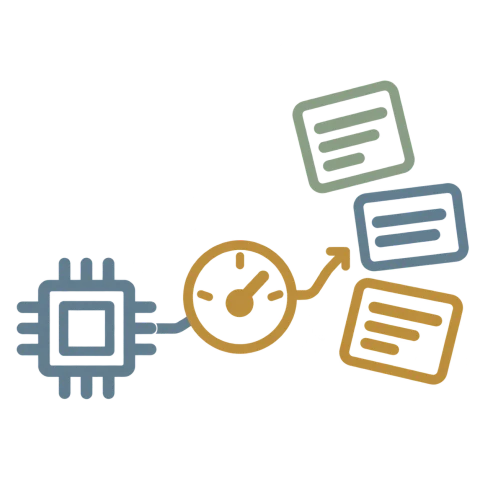
An unchanged model feeds a gold sampler dial, which leads to several distinct text outputs.

Simple Diffusion Language Models Are More Effective Few-Step Generators Than Reported

Hasan Amin, Ming Yin, and Rajiv Khanna.

arXiv preprint arXiv:2609.33947

September 2026
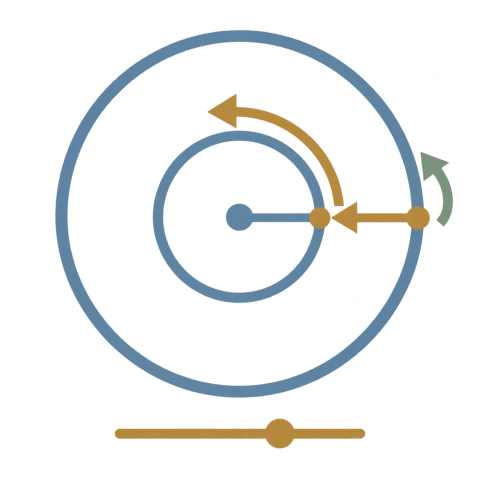
Two weight norms share a direction; inward shrinkage is paired with a larger angular step at the smaller radius, above a schedule control.

When Does Scale-Invariant Optimization Become Unstable? An Exact Schedule Law with Weight Decay

Hasan Amin, Wei-Kai Chang, and Rajiv Khanna.

arXiv preprint arXiv:2609.09116

September 2026
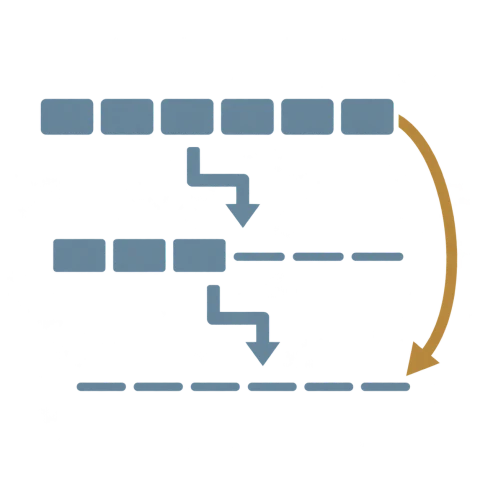
Masked writing becomes readable through successive refinements, with a gold shortcut skipping an intermediate step.

Consistent Diffusion Language Models

Hasan Amin, Yuan Gao, Yaser Souri, Subhojit Som, Ming Yin, Rajiv Khanna, and Xia Song.

Proceedings of the 43rd International Conference on Machine Learning (ICML)

Seoul, South Korea · July 2026
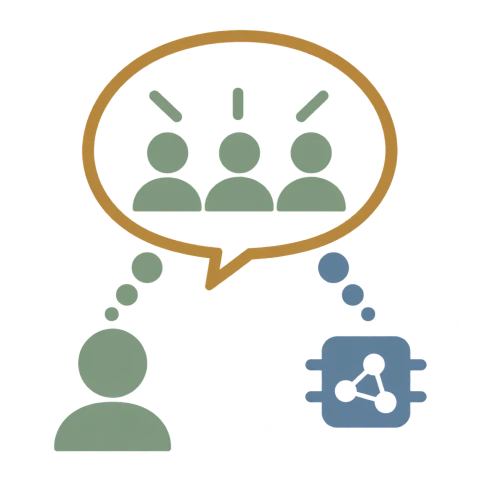
A human and an AI separately consider a group's expressed opinions.

From Fallback to Frontline: When Can LLMs be Superior Annotators of Human Perspectives?

Hasan Amin, Harry Yizhou Tian, Xiaoni Duan, Chien-Ju Ho, Rajiv Khanna, and Ming Yin.

Findings of the Association for Computational Linguistics (ACL Findings)

San Diego, USA · July 2026
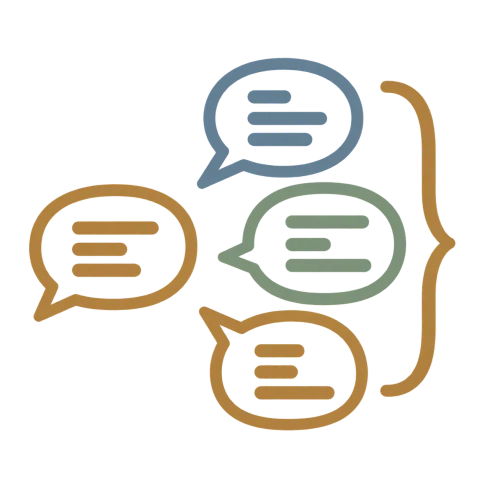
One prompt is paired with a fan of distinct response bubbles, retaining several valid answers.

Escaping the Mode Lottery: Multi-Response Training Improves Language Model Generalization

Hasan Amin, Kian Ahrabian, Ming Yin, and Rajiv Khanna.

arXiv preprint arXiv:2606.00544

May 2026
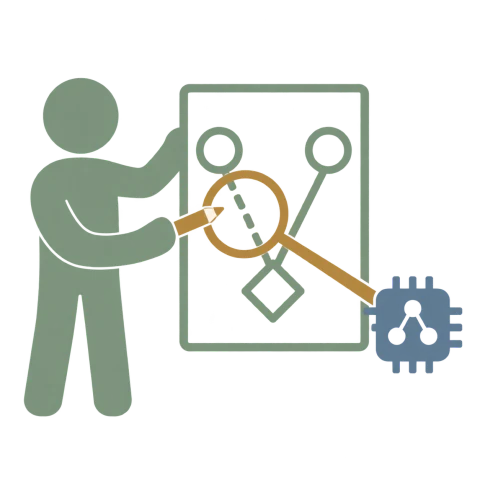
A person holds their own decision argument and revises a tentative reasoning link with a pencil, while an AI-assisted lens helps examine that link.

Understanding the Effects of AI-Assisted Critical Thinking on Human-AI Decision Making

Harry Yizhou Tian, Hasan Amin, and Ming Yin.

Proceedings of the 2026 CHI Conference on Human Factors in Computing Systems (CHI)

Barcelona, Spain · April 2026
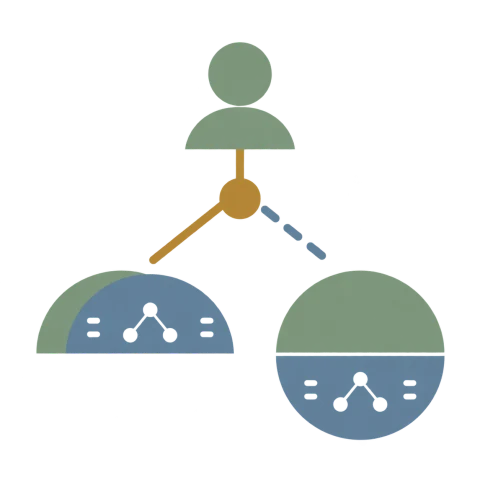
A human-conditioned switch chooses between overlapping and complementary regions of human and AI expertise.

Align When They Want, Complement When They Need! Human-Centered Ensembles for Adaptive Human-AI Collaboration

Hasan Amin, Ming Yin, and Rajiv Khanna.

Proceedings of the 40th AAAI Conference on Artificial Intelligence (AAAI)

Singapore · January 2026
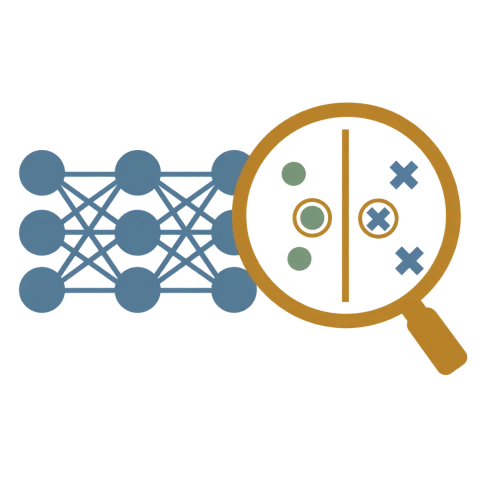
A magnifying glass over a neural network reveals a separating boundary and highlighted support examples nearest it.

On the Support Vector Effect in DNNs: Rethinking Data Selection and Attribution

Syed Hasan Amin Mahmood, Ming Yin, and Rajiv Khanna.

Proceedings of the 31st ACM SIGKDD International Conference on Knowledge Discovery and Data Mining (KDD)

Toronto, Canada · August 2025
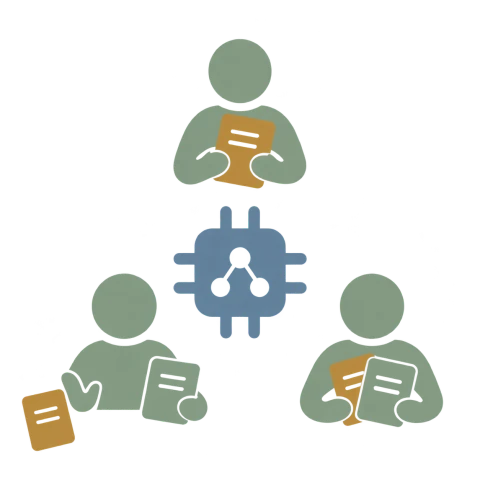
People accept, set aside, or combine the same AI advice with their own judgment.

Mix and Match: Characterizing Heterogeneous Human Behavior in AI-assisted Decision Making

Zhuoran Lu, Syed Hasan Amin Mahmood, Zhuoyan Li, and Ming Yin.

Proceedings of the 12th AAAI Conference on Human Computation and Crowdsourcing (HCOMP)

Pittsburgh, USA · October 2024

An AI offers advice while anticipating how the person receiving it will choose.

Designing Behavior-Aware AI to Improve the Human-AI Team Performance in AI-Assisted Decision Making

Syed Hasan Amin Mahmood, Zhuoran Lu, and Ming Yin.

Proceedings of the 33rd International Joint Conference on Artificial Intelligence (IJCAI)

Jeju, South Korea · August 2024

See more…

Academic Reviewing

Conferences

  • ICLR 2026, 2027
    International Conference on Learning Representations
  • NeurIPS 2024, 2025, 2026
    Conference on Neural Information Processing Systems
  • ICML 2025, 2026
    International Conference on Machine Learning Outstanding reviewing recognition · 2026
  • AAAI 2026, 2027
    AAAI Conference on Artificial Intelligence
  • AISTATS 2025, 2026
    International Conference on Artificial Intelligence and Statistics
  • CHI 2025, 2026
    ACM Conference on Human Factors in Computing Systems Outstanding reviewing recognition · 2026
  • ACL 2025
    Annual Meeting of the Association for Computational Linguistics Outstanding reviewing recognition · 2025
  • CI 2025
    ACM Conference on Collective Intelligence
  • KDD 2024
    ACM SIGKDD Conference on Knowledge Discovery and Data Mining
  • IJCAI 2024
    International Joint Conference on Artificial Intelligence

Journals

Workshops & other tracks

  • GenAI for Health 2024, 2025, 2026
    Workshop on GenAI for Health at NeurIPS
  • ACM CHI Late-Breaking Work
  • IMLH 2022, 2023
    Workshop on Interpretable Machine Learning in Healthcare at ICML

Service & Community

See more…